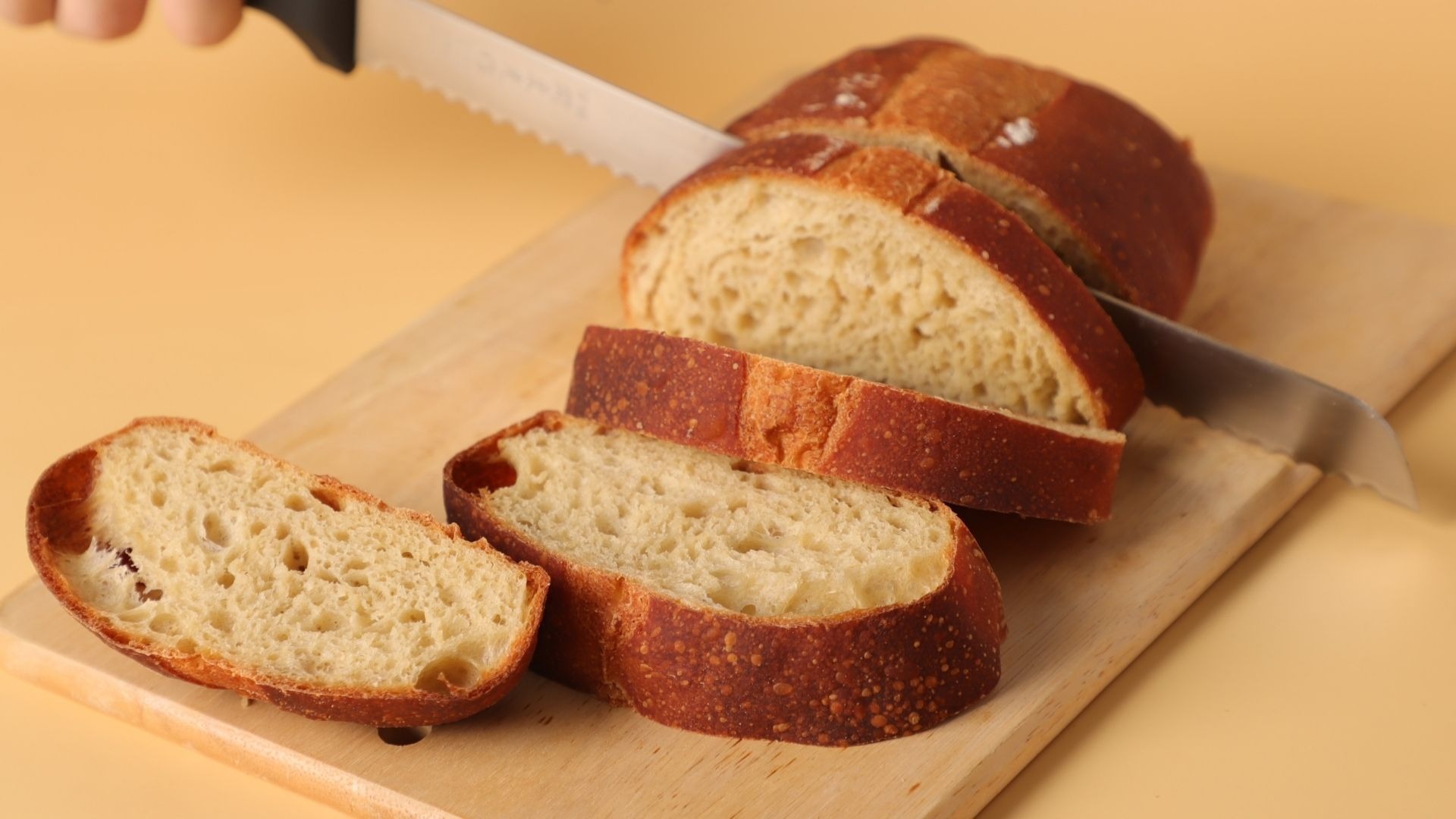


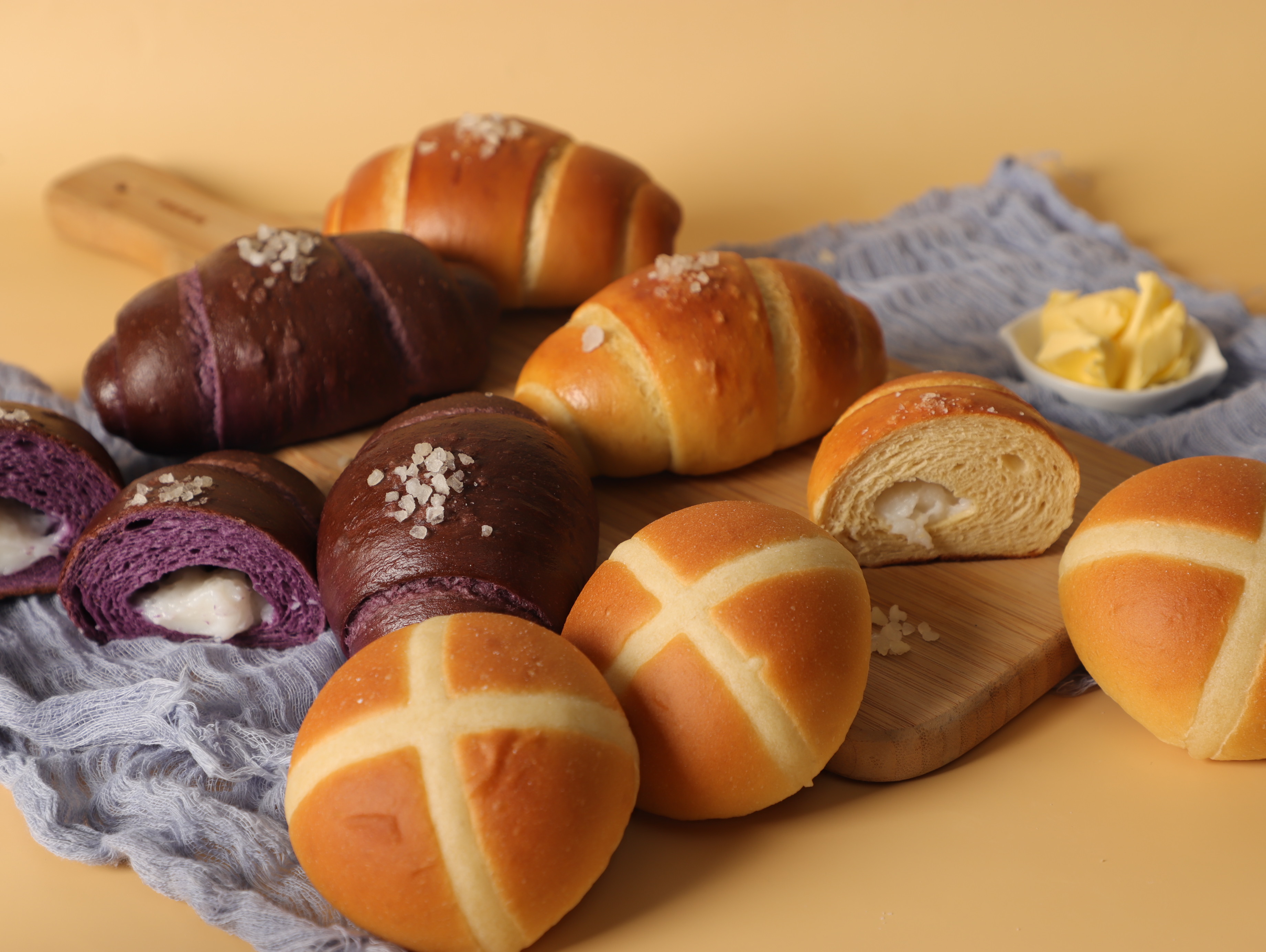
These golden, buttery rolls deliver everything you crave in a bakery-style treat: delicately crisp, crackly crusts and soft, airy interiors that pull apart in tender layers. Popular across East Asia as shio pan in Japan and sogeum-ppang in Korea, salt bread is shaped by wrapping each portion of dough around a core of rich butter, creating its signature light, hollow center.
Made with Chewco High-Protein Salt Bread Premix (GET FREE SALT BREAD MIX SAMPLE HERE) this version is designed for both performance and flavor, offering the perfect balance of strength and softness. The high-protein blend helps the dough rise beautifully while still producing a tender, cloud-like crumb. As the rolls bake, the butter melts and steams from within, creating that iconic airy pocket and a deeply satisfying, butter-fried base.
Despite its gourmet look and indulgent taste, salt bread is an everyday favorite in bakeries throughout Asia, simple, comforting, and endlessly versatile. Whether served fresh for a weekend brunch or enjoyed as part of your daily routine, these rolls bring professional-quality results straight from your oven with the convenience of Chewco’s expertly formulated premix.
Part A – Sponge (Pre-ferment)
Ingredients
- High-gluten flour
- Dry yeast
- Sugar
- Water
Method
- Scale all ingredients based on 100% high-gluten flour as the reference base.
- Mix all ingredients slow and medium speed until smooth.
- Adjust water to reach a dough temperature of 24°C.
- Cover and ferment at 28°C RH for ~2 hours until expanded with a light alcoholic aroma and airy structure.
Part B – Final Dough
Ingredients
- Chewco High-Protein Premix
- High-gluten flour
- SS-CL
- Sugar
- Margarine
- Salt
- Water
- Trehalose
Method
- Add sponge and dry ingredients (excluding margarine and water) using sponge flour as 100% reference base.
- Mix 3 min slow, then 5 min fast.
- Add water gradually, adjusted to reach hydration of ~55–60% of total flour base.
- Add margarine at ~8–9% of flour base, mix 2 min slow until fully incorporated.
- Continue mixing ~6 min fast until dough is elastic and smooth.
- Confirm full gluten development using windowpane test.
- Target final dough temperature: ~27°C.
- Rest dough for ~20 min at room temperature.
Processing
- Divide dough into equal portions based on final product weight standard (100% batch scaling reference).
- Round lightly to preserve gas retention.
- Rest briefly for relaxation.
- Freeze shock at -17°C for ~20 min.
- Shape into sea salt bread form.
Final Proof
- Proof at 32°C
- Proof until dough expands to approximately 150–170% of original size (~30 min)
Baking
- Preheat oven for stable heat distribution.
- Set oven temperatures:
- Top heat: 220°C
- Bottom heat: 180°C
- Apply sea salt evenly on top and spray light water mist for steam effect.
- Load trays evenly for airflow consistency.
- Bake until golden brown and fully set (~15 min or until structure is firm and crust is evenly colored).
- Remove and cool immediately on rack.
Topping / Glaze
Ingredients
- Butter
Method
- Apply butter based on 100% surface coverage requirement after cooling.
- Optional: return briefly to oven for light reheating to activate shine and aroma.